Diamonds vs Other Gemstones: What’s the Difference and Which Should You Choose?
Diamonds are often the first stone people think of when choosing fine jewellery, particularly for engagement rings and pieces designed to last a lifetime. But diamonds are only one option within a much broader world of gemstones, each with its own character, symbolism, and practical considerations.
With more choice than ever, including lab-grown diamonds and coloured precious stones, it’s natural to ask how diamonds and gemstones truly compare. This guide explores the real differences, from formation and durability to cost and long-term wear, so you can choose the stone that feels right for you.
Is Diamond a Gemstone?
A common question we hear is: is diamond a gemstone?
The answer is yes.
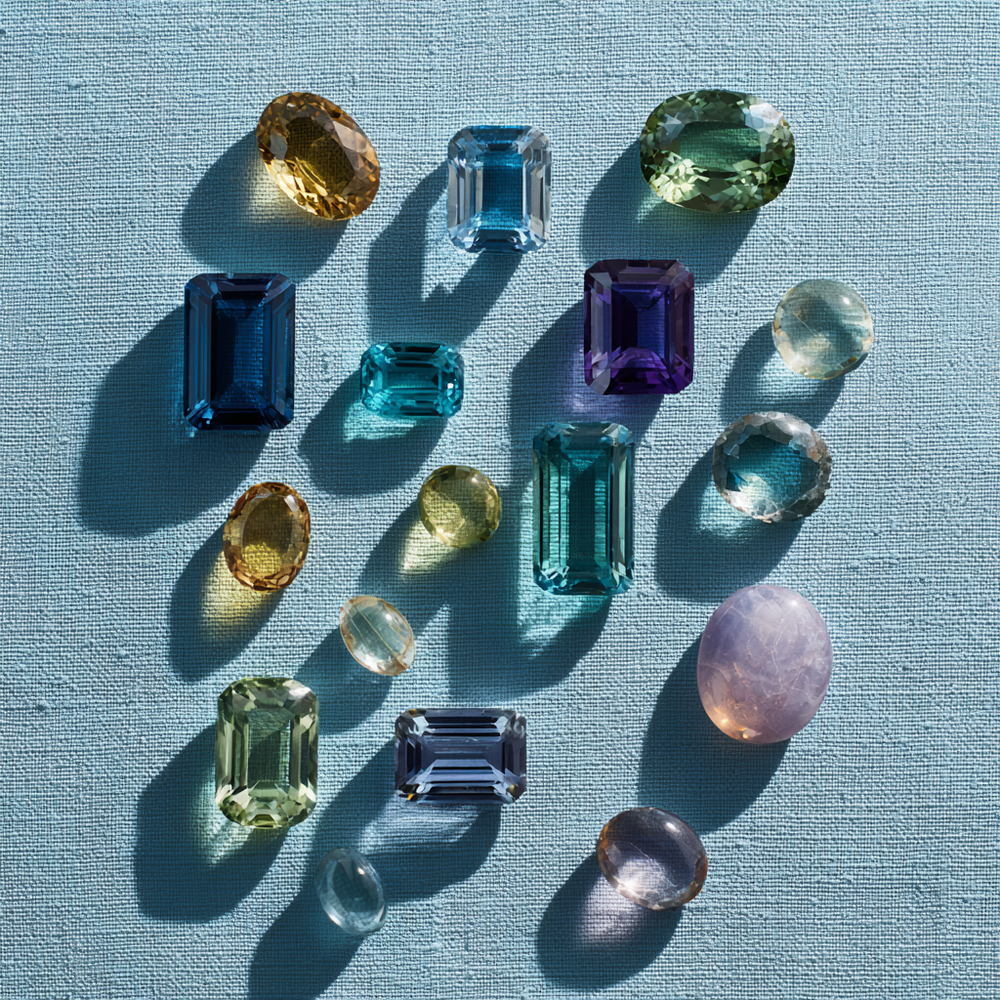
“Gemstone” is an umbrella term that includes diamonds alongside sapphires, rubies, emeralds, and many other stones. What sets diamonds apart isn’t their category, but their composition, hardness, and performance in everyday jewellery.
Cut precision also plays a defining role in how a diamond or gemstone performs. Our guide to understanding diamond cuts and craftsmanship explores how proportion and faceting influence brilliance and durability.
Understanding this distinction helps clarify the relationship between precious stones and diamonds, rather than viewing them as separate or competing options.
How Diamonds and Gemstones Are Formed
All natural gemstones are formed beneath the Earth’s surface under intense pressure and heat, but not all in the same way.
Diamond formation
Diamonds are unique because they are formed from a single element: carbon. Under extreme pressure deep within the Earth’s mantle, carbon crystallises into diamond over billions of years. Volcanic activity then brings these crystals closer to the surface.
This singular composition is one of the reasons diamonds are exceptionally hard and well-suited to everyday wear.
Other gemstone formation
Most other gemstones are formed from multiple elements combined into mineral compounds. For example:
-
Sapphire and ruby are varieties of corundum (aluminium oxide)
-
Emerald is a type of beryl, coloured by trace elements
-
Aquamarine, jade, and zircon form through different geological processes
These trace elements are what give gemstones their distinctive colours and much of their individuality.
Diamond vs Gemstone: Durability and Everyday Wear
One of the most practical considerations when choosing between a diamond vs gemstone is how the stone will wear over time.
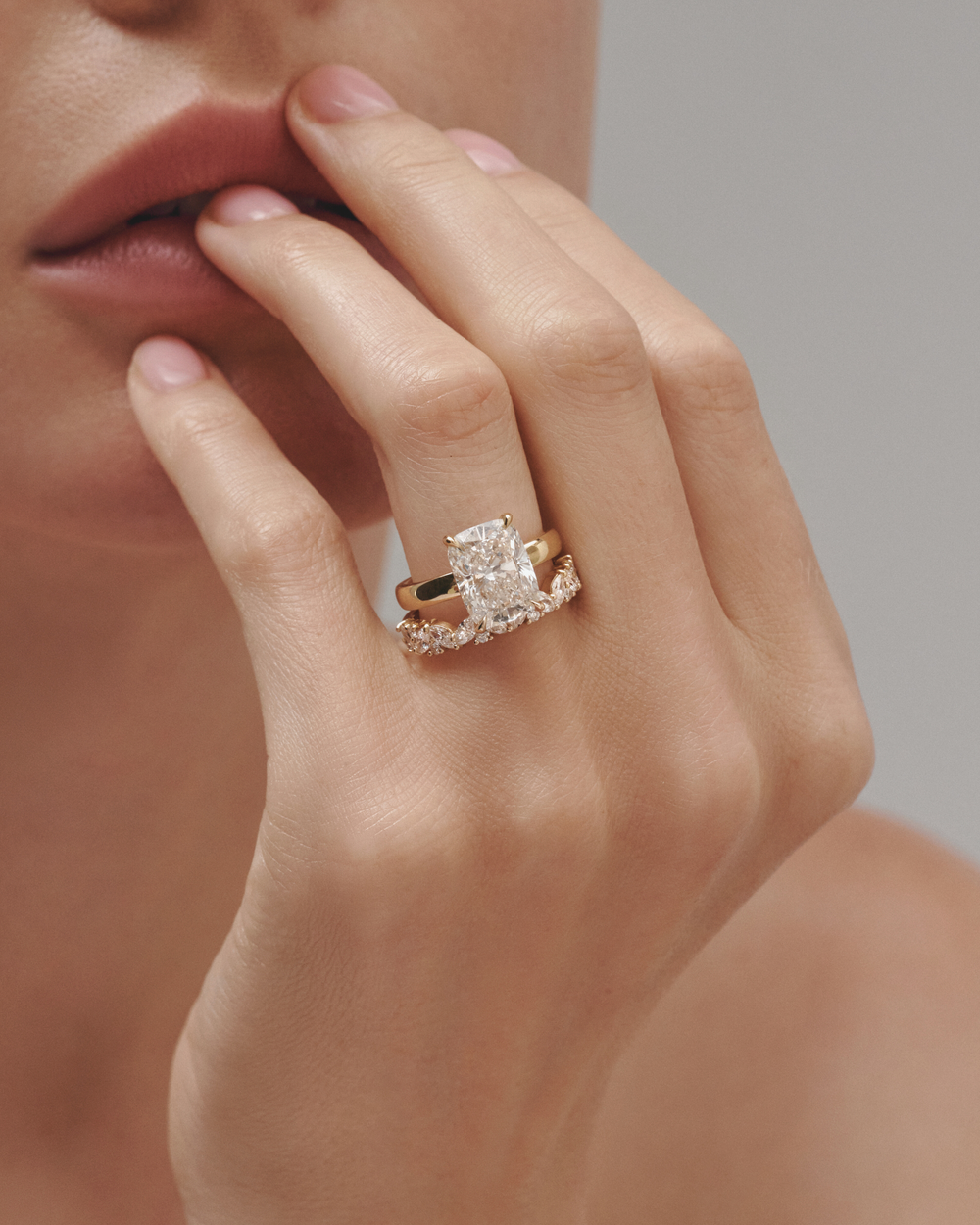
Diamonds are the hardest natural material on Earth, making them highly resistant to scratching. This is why they are so often chosen for rings worn daily.
Other gemstones compare differently:
-
Sapphires and rubies are very durable and suitable for everyday wear, though they can show abrasion over time
-
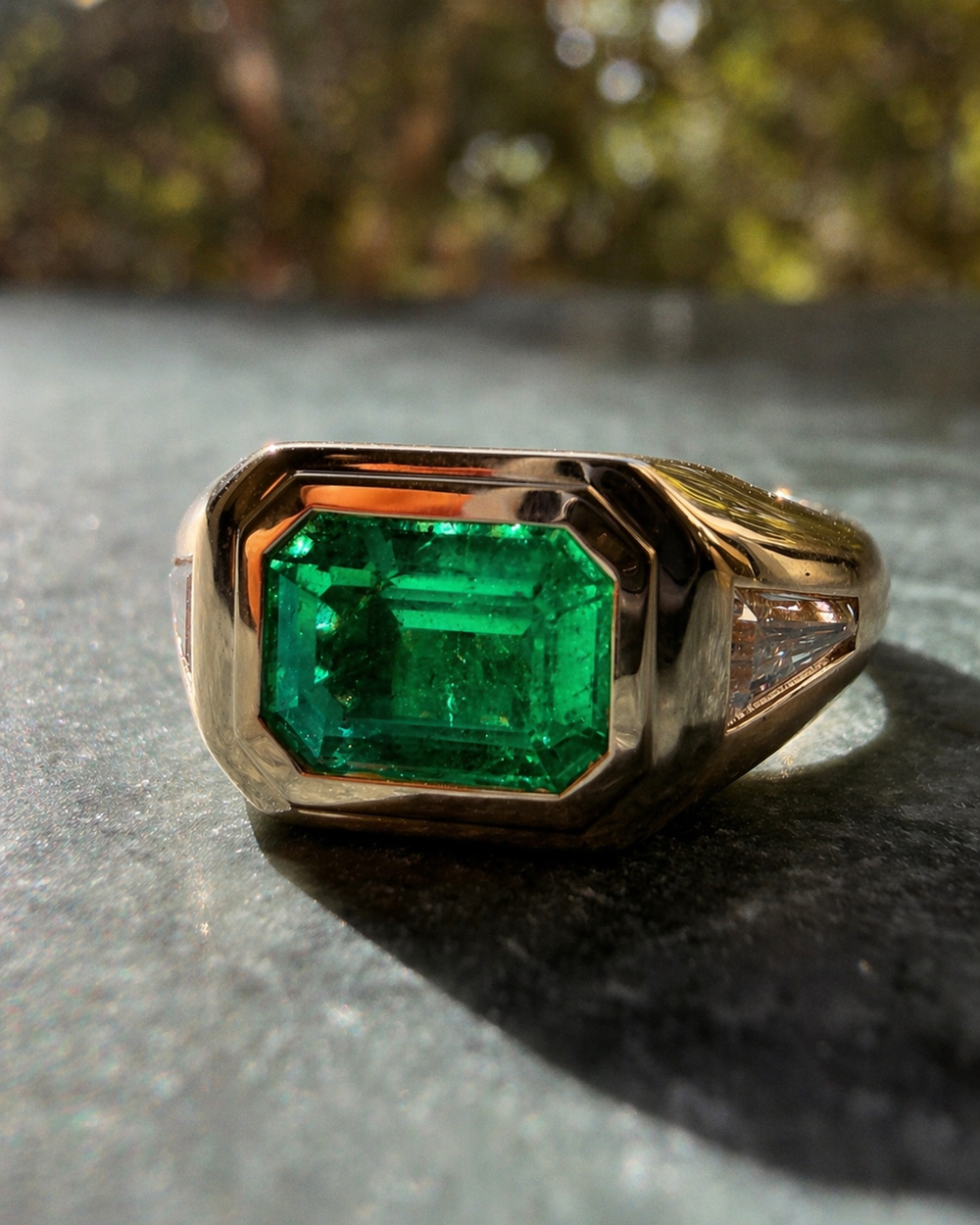
Emeralds are visually striking but more delicate, often better suited to occasion wear
-
Moissanite offers exceptional brilliance and durability and is often chosen for its value
There is no universally “better” choice, only what best suits your lifestyle and how you plan to wear your jewellery.
For a more detailed comparison of which stones perform best in engagement rings, explore our guide to the best gemstones for engagement rings, including a Mohs hardness breakdown and daily wear suitability.
Gemstone vs Diamond Cost: What to Expect
Another common consideration is gemstone vs diamond cost, particularly as lab-grown options become more widely available.
At a retail level, most jewellery, whether diamond or gemstone, should not be viewed as a financial investment. Resale values are often lower than purchase prices, regardless of the stone.
Lab-grown diamonds, in particular, are expected to continue decreasing in price as production becomes more efficient. For this reason, they are often chosen for:
-
accessibility
-
visual beauty
-
modern values
Natural diamonds and coloured gemstones remain finite, and their value is tied more closely to rarity, provenance, and long-term desirability than resale potential.
Metal choice also influences long-term value and wear. Platinum and 18k gold offer structural integrity suited to daily rings, as explored in our guide to choosing the right metal for your jewellery.
If you’re exploring modern alternatives, you may wish to view our collection of lab-grown diamond engagement rings or lab-grown diamond wedding rings and bands.
Precious Stones and Diamonds: Does the Label Matter?
The terms “precious” and “semi-precious” date back centuries and are no longer considered indicators of quality. Traditionally, four stones are classed as precious:
-
Diamond
-
Sapphire
-
Ruby
-
Emerald
In reality, beauty, durability, and meaning are not defined by labels. Many gemstones outside this category are chosen precisely because they feel personal, distinctive, and less expected.
These principles sit at the heart of fine jewellery crafted for longevity and meaning, where structure and wearability are considered as carefully as aesthetics.
Diamonds, Gemstones & Meaning
For many people, meaning plays just as important a role as appearance. Birthstones, for example, are often chosen to mark personal milestones or connections.
If symbolism is important to you, you may enjoy exploring our guide to birthstones by month, which looks at the meaning and colour behind each gemstone and how they’re worn today.
Which Should You Choose?
Rather than asking which stone is “better”, a more useful question is:
Which stone fits the way I live and what I want this piece to represent?
You may be drawn to a diamond for its durability and versatility, or to a gemstone for its colour, symbolism, or individuality. Both are equally valid choices when made with intention.
If you’re designing an engagement ring, our custom engagement ring service allows you to choose the stone, setting, and details that feel most personal.
Combining Diamonds and Gemstones
Diamonds and gemstones don’t need to be chosen separately. Combining the two allows for greater individuality and meaning within a single piece.
Diamonds are often used as centre stones for their durability, while gemstones work well as accent stones to introduce colour or personal significance. This can also be reversed, a gemstone as the centre stone, framed by diamonds to enhance brilliance and balance.
This approach adds depth without compromising wearability. Gemstones can reflect symbolism, heritage, or a birth month, while diamonds provide structure and longevity.
A Lindelli Perspective
At Lindelli, we believe jewellery earns its value through how it’s worn and what it comes to represent. Whether you choose a diamond, another gemstone or the combination of the two, the most enduring pieces are those chosen thoughtfully, not by trend or expectation.
If you’d like guidance selecting a stone or designing something truly personal, you can book a private appointment with our team. For those who prefer to explore in person, you’re always welcome to visit one of our boutiques and view our Lindelli locations in Sydney to find your nearest store.
FAQs
Are gemstone and diamond the same thing?
No, but a diamond is a gemstone. “Gemstone” is a broad category that includes diamonds, sapphires, rubies, emeralds, and others.
Is a gem better than a diamond?
Neither is better by default. A gemstone may be better if you value colour or symbolism; a diamond may be better if you want durability and everyday wear.
Which is more expensive, a diamond or a gemstone?
Diamonds are usually more expensive, but not always. High-quality rubies, sapphires, and emeralds can cost more than diamonds, while many gemstones are more affordable.